





Bucket seat or reclining seat: which one do you need for sim racing?

A bucket seat is a rigid racing seat with shoulder support and pronounced side bolsters, designed to accommodate harnesses and hold the driver securely at high speeds. A reclining racing seat combines some of that lateral support with the everyday comfort of an adjustable backrest and without the upper shoulder wings.
What is a bucket seat and who is it for?
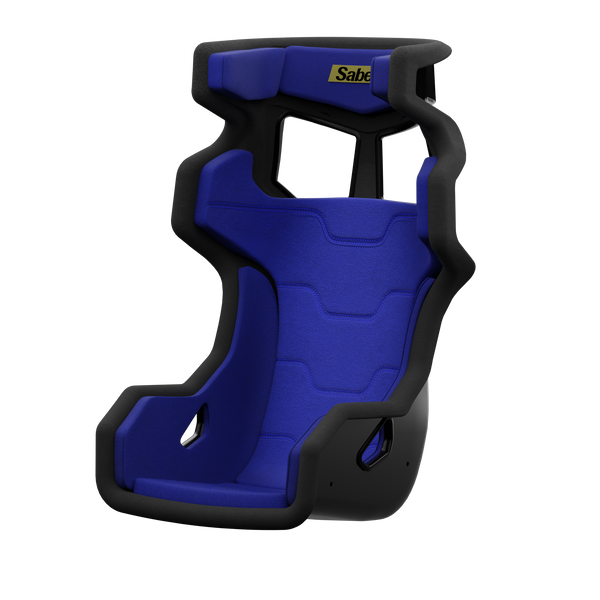
A bucket seat is a rigid racing seat that supports the shoulders as well as the lower back and legs.
It is designed to accommodate harnesses and keep the driver properly supported while driving at high speeds.
In sim racing you are not exposed to real-world cornering forces, but your body still moves under hard braking, normal steering inputs and especially in a motion simulator, where seat rigidity plays an important role.

It has harness openings around the shoulders and lower seat area. In real motorsport, bucket seats must meet FIA homologation requirements to be fitted to competition cars. That approval is not mandatory in sim racing, but it is a useful indicator of structural rigidity.
Bucket seats are available in materials such as fibreglass and carbon fibre. Most options on the market provide very good rigidity; the main differences are usually cost and weight.
A sim racing bucket seat is aimed at drivers who want strong support, minimal seat flex and a driving position that feels closer to a real competition car.
Top 3 bucket seats for sim racing
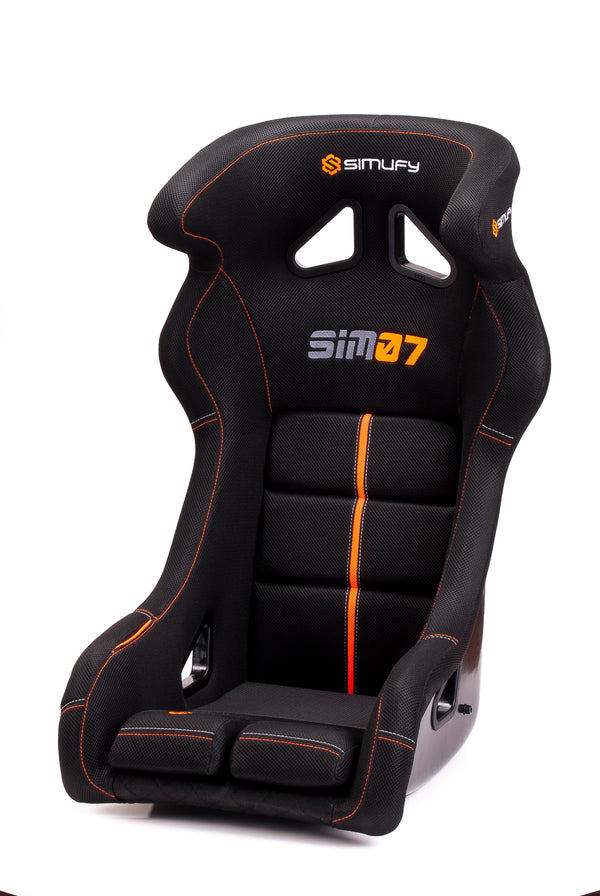
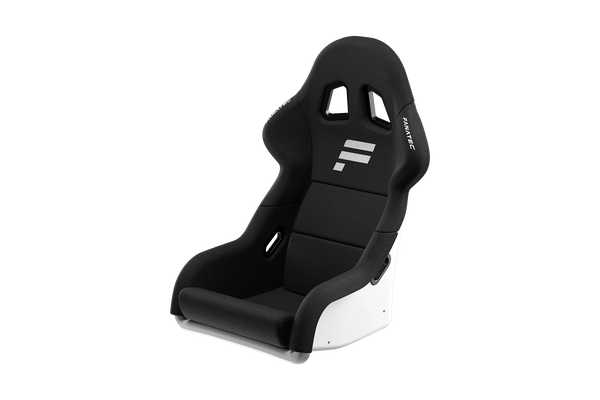
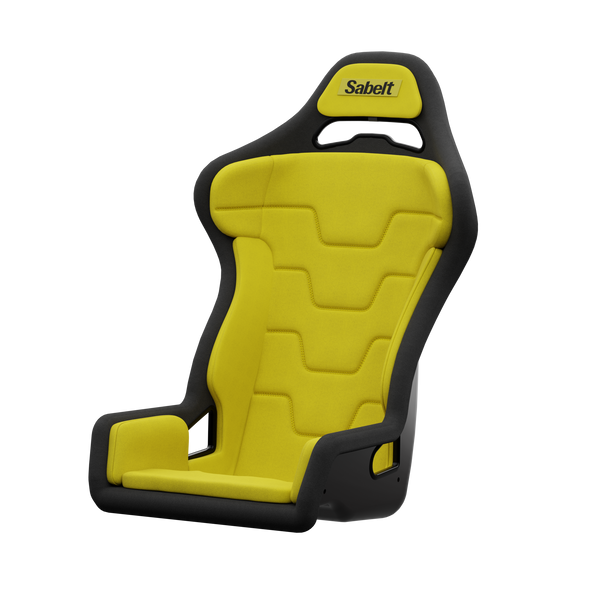
What is a reclining seat and who is it for?

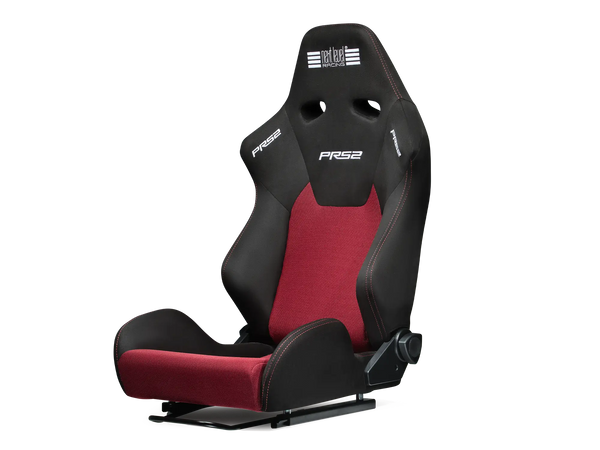
A reclining racing seat balances support and rigidity with the convenience of an adjustable backrest.
Reclining seats are very practical for everyday use because they offer more room to get in and out of the simulator. That also makes them easier to share between different drivers.
They normally offer more room around the back and legs than a fixed bucket seat because the driver is not held as tightly inside the shell. For many sim racers, that means greater comfort in long sessions, with slightly less support and rigidity in return.
Reclining sim racing seats suit drivers who want a balance between support and day-to-day comfort and are willing to sacrifice some seat rigidity.
Top 3 reclining seats for sim racing
Reclining seat
Next Level Racing ERS3
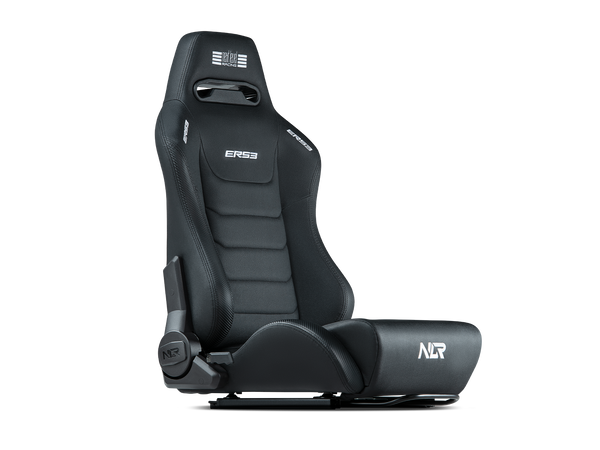
Reclining seat
Fanatec CSL
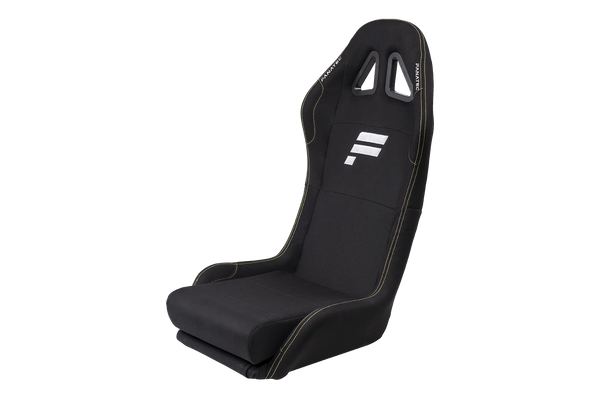
Reclining seat
Next Level Racing ERS5
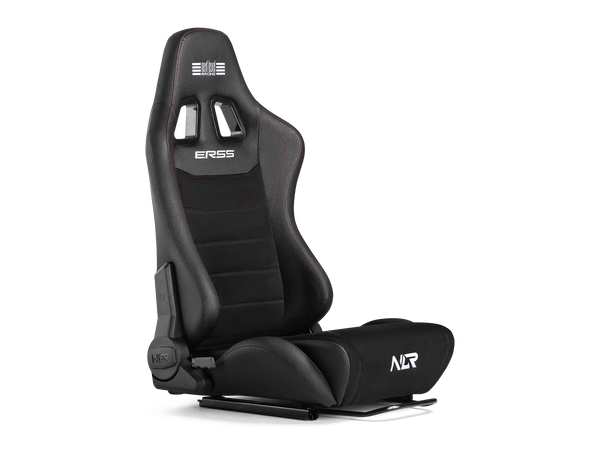
Comparison table: Bucket seat vs reclining seat
7 criteria for choosing a bucket seat or reclining seat
01
Discipline
Seats by driving style: GT, rally and formula
- If you mainly drive GT or rally cars, you have more freedom because both a bucket seat and a reclining seat can work well for an upright, road-car-style driving position.
- If you mainly drive formula cars or prototypes, choose a formula-specific bucket seat. This driving position does not rely on a reclining backrest because the driver sits low and reclined, with the legs raised relative to the hips.
02
Motion
What type of seat should you choose for a motion simulator?
- If you use a motion simulator, a rigid seat that is securely mounted stops being optional. A fixed bucket seat is the right choice if you want the motion system to transmit its movement cleanly through the cockpit.
03
Ergonomics
How do driver height and body shape affect seat choice?
- If a sim racer is not comfortable in the seat, the whole driving experience suffers. Height and body shape are therefore among the most important factors when choosing between seat types.
- For taller or larger drivers, reclining seats are often the safer choice because their more universal dimensions usually provide more room and fewer ergonomic issues.
04
Session length
How long are your sessions?
- When you drive for several hours, ergonomics and comfort become important factors when choosing between a bucket seat and a reclining seat.
- For most users, reclining seats tend to feel more comfortable over long sessions. However, a driver who fits a bucket seat properly can achieve an equally ergonomic driving position.
05
Harnesses
Using racing harnesses with your seat
- Sim racers who use harnesses should choose a bucket seat because these seats provide the correct harness openings and are designed to work properly with multi-point belts.
- When you use harnesses, seat rigidity also becomes important to maintain a stable and convincing driving position.
06
Material
Seat upholstery material depending on use
- Both bucket and reclining seats come in different upholstery finishes, including breathable 3D mesh, fire-resistant fabric, Alcantara-style materials, synthetic leather and other textiles.
- Finishes that feel softer against the skin, such as Alcantara-style fabric or synthetic leather, often breathe less and require more cleaning. More technical fabrics such as breathable 3D mesh and polyester blends can be a better balance of ventilation and low maintenance. That is also why these materials are commonly used in showrooms and simulation centres.
07
Shared use
The difference between individual and shared use
- If several people will use the same simulator, a reclining seat is usually the most practical option because no two drivers have the same body shape, height or ergonomic needs.
- A bucket seat has a more specific fit and offers less freedom to accommodate different drivers. The easier entry, exit and backrest adjustment of a reclining seat generally make it the better option for shared rigs.
Cockpit compatibility: the point many sim racers overlook
One of the most important and most frequently overlooked checks is cockpit compatibility. Both bucket and reclining seats must be verified against the mounting options on your rig.
Below are the mounting cases that many sim racers overlook.
How do you mount a sim racing bucket seat?
Seats are normally attached to a cockpit using one accessory or a combination of accessories: seat brackets, or brackets together with seat sliders.
Bucket seats and reclining seats use different mounting systems, so it is important to understand the difference:
Side mounting
Mounting a bucket seat
The upper part of the seat bracket bolts to the sides of the bucket seat, while the lower part bolts to the cockpit profiles.


Bottom mounting
Mounting a reclining seat
These seats generally use bottom mounting points and, in some cases, integrated sliders. The underside of the seat can bolt directly to the cockpit when the mounting widths are compatible. If the cockpit does not support that width directly, alternatives include mounting aluminium profiles transversely and adding a suitable seat bracket.
Useful accessories for mounting a bucket or reclining sim racing seat
Accessory
Bucket seat brackets
This component connects the bucket seat to the cockpit and lets you adjust its angle and, to a limited extent, its height. The upper part mounts to the sides of the seat and the lower part to the aluminium profiles of the cockpit.
View seat bracketsAccessory
Seat slider
A seat slider lets you move the seat forward and backward, much like in a road car. It sits between the cockpit and the seat bracket. Because sliders have a fixed width, always measure your cockpit profiles before checking compatibility.
View seat sliderAccessory
Seat bracket with integrated slider
This is an all-in-one solution that mounts the seat to the cockpit while allowing fore-and-aft adjustment. Like a conventional slider, it has a fixed width that should be checked against your cockpit before purchase.
View bracket with sliderRecommendation by driver profile
For drivers who already know their main discipline, these four seat options match four common sim racing profiles:
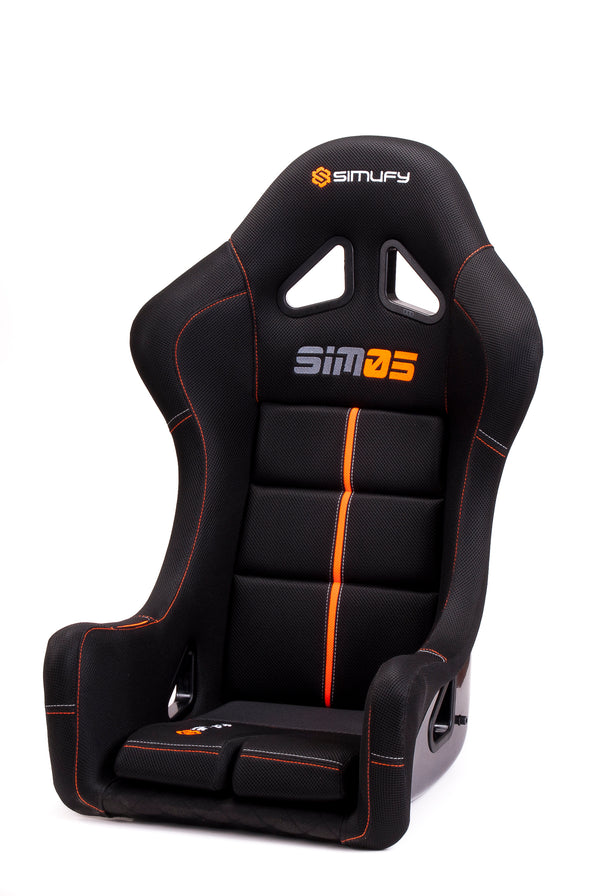
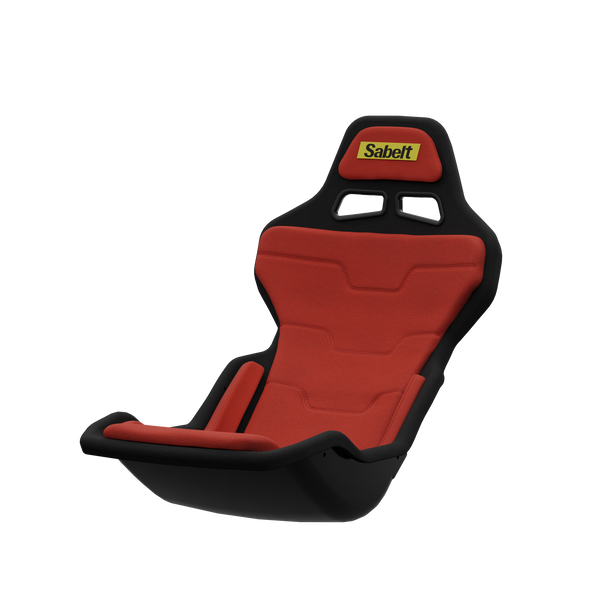
Beyond the seat: haptics, ventilation and custom foam
There are accessories that can completely change how a sim racing seat feels. However, some of these upgrades can also affect which type of seat makes the most sense from the start.
Feedback
Transducers and haptic pads
These accessories add another layer of information while you drive.
A large part of haptic feedback is transmitted through the seat. Therefore, if you plan to install this type of accessory, a rigid fibreglass bucket seat helps transmit vibration more effectively. Reclining seats tend to absorb more of that feedback and are generally less suitable for this use.


Feedback
Haptic seat inserts
This is an accessible way to add haptic feedback without installing transducers on the cockpit. These inserts replace or sit within the seat foam and deliver simulator feedback directly to your body.
Comfort
Ventilation
Hot weather and sim racing are not a great combination: long stints become harder and drivers often spend less time in the simulator. That is why ventilated cushions and seat kits exist. They move air around the lower legs and back and, together with breathable upholstery, can significantly reduce heat build-up while driving.


Adaptive cushions and mouldable foam
In real motorsport, drivers often build a seat insert around their own body using custom foam and moulds. The same idea can be applied in sim racing with adaptive cushions and mouldable foam that relieve pressure points and improve ergonomics. When adding this type of padding, remember to readjust seat height and distance because your body position changes. Extra padding can also reduce perceived rigidity in a motion simulator.
Conclusion: which sim racing seat should you choose?
Frequently asked questions about bucket and reclining sim racing seats

Written by Salva Talens
Professional esports driver and coach, co-founder of Simufy Academy
Engineer and professional esports driver, co-founder of Simufy Academy. He races in the iRacing top split with over 9,000 iRating and has qualified for the Porsche TAG Heuer Esports Supercup. He knows hardware from the only place that matters: lap pace.