





Sequential vs H-pattern shifter in sim racing

A sequential shifter is operated forward and backward to shift up and down. An H-pattern shifter recreates the gate of a classic manual car and requires a clutch. The right choice between an H-pattern shifter, a sequential shifter or paddles depends on the type of car you drive and the context: rally, drift, circuit racing, classics, modern cars, etc.
The short answer: do I need a shifter for sim racing?
In some cases yes, in others no. To answer that question, it helps to understand the right use case for each shifter, because the choice is not about going faster, but about which cars you drive and in what context.
If you want to compare hardware before deciding, you can browse the full range of sim racing shifters.
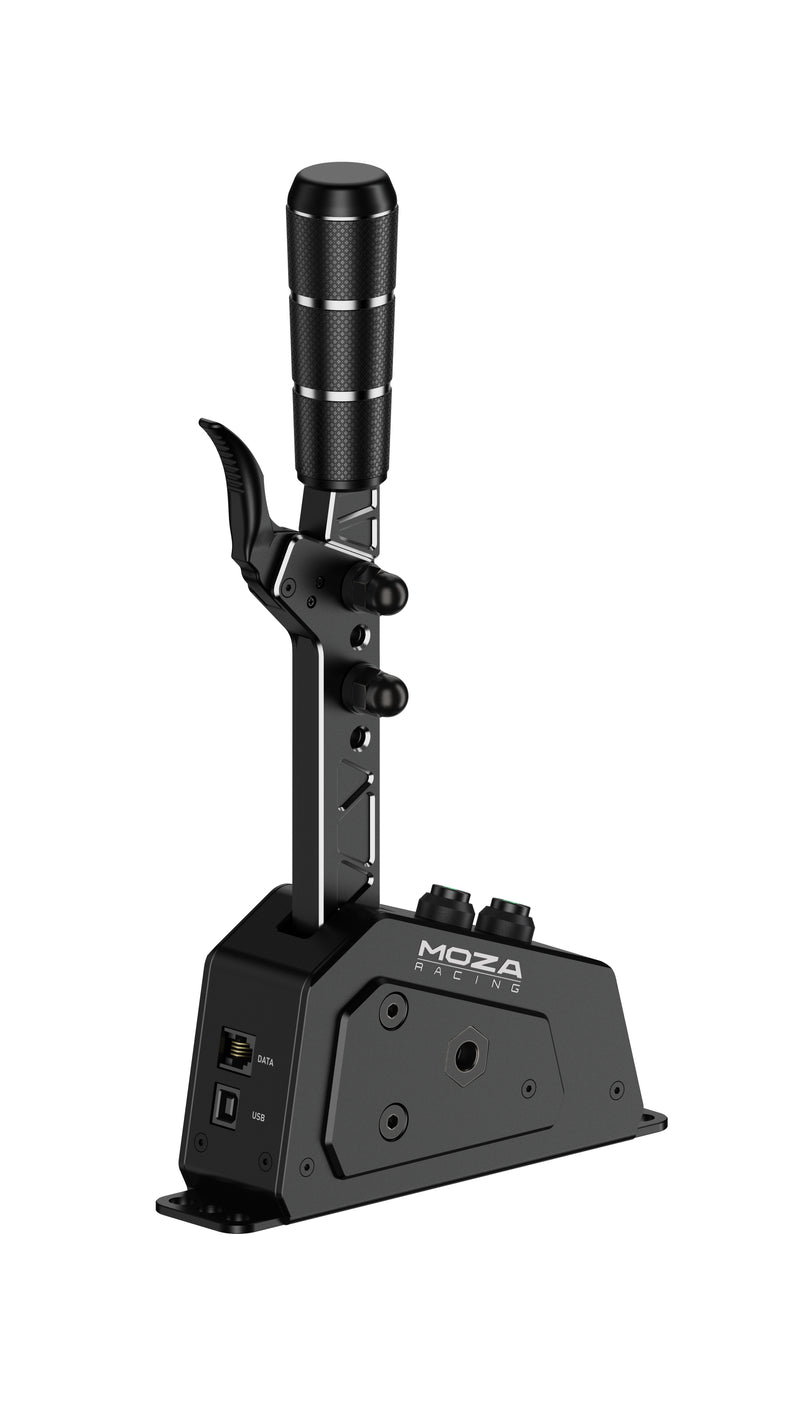
What is a sequential shifter?
A sequential shifter changes gear with a single forward or backward movement. You do not have to find a specific gear position: pull back to shift up and push forward to shift down.
It has a short throw that ends against a mechanical stop, with a crisp, positive action.

This type of gear change is used in some rally and drift cars, many touring cars from the 1990s and 2000s, and some current circuit series such as V8 Supercars.
Unlike an H-pattern shifter, a sequential shifter can be used without a clutch pedal, which can still be faithful to how the real car works.
How it works
Movement
Forward / backward
Throw
Short, with a mechanical stop
Clutch
Not necessarily


What is an H-pattern shifter?
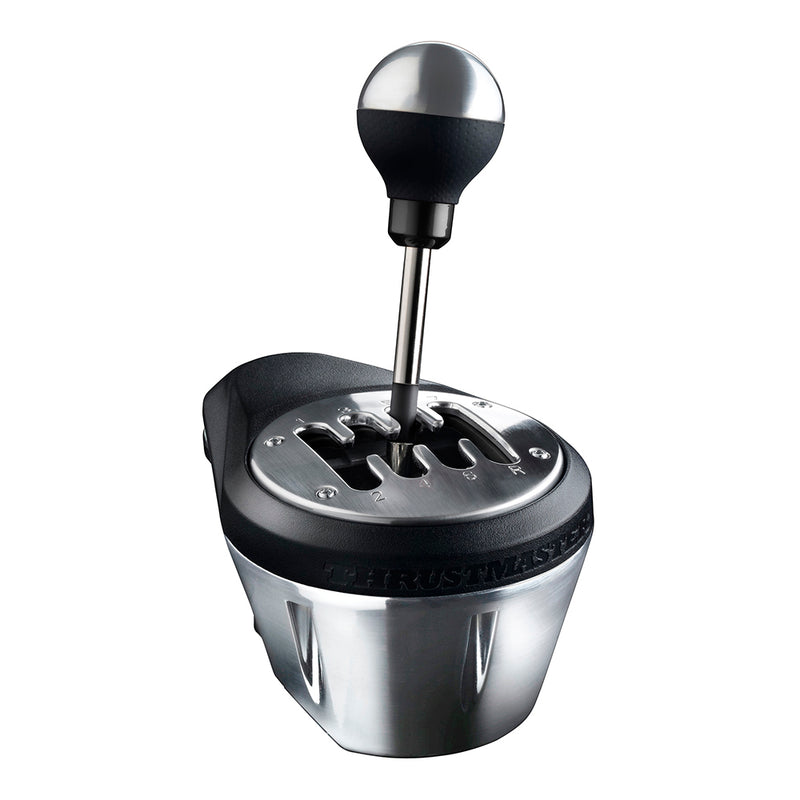
An H-pattern shifter changes gear by moving the lever into the correct slot in the gate, replicating a classic manual gearbox.
Unlike a sequential shifter, an H-pattern shifter does require a clutch pedal on your simulator. Without a physical clutch, this option makes little sense.

What it requires
Movement
H-pattern gate
Clutch
Yes
Related technique
Heel-and-toe and rev matching
This type of gearbox is found in classic circuit race cars, historic touring cars and, in general, road cars with a manual gearbox.
It is closely linked to heel-and-toe and rev-matching techniques, especially in older cars without an electronic throttle blip on downshifts. Footwear also matters in that context: you can read more in our article about shoes or socks for sim racing.


Comparison: sequential, H-pattern and paddle shifters
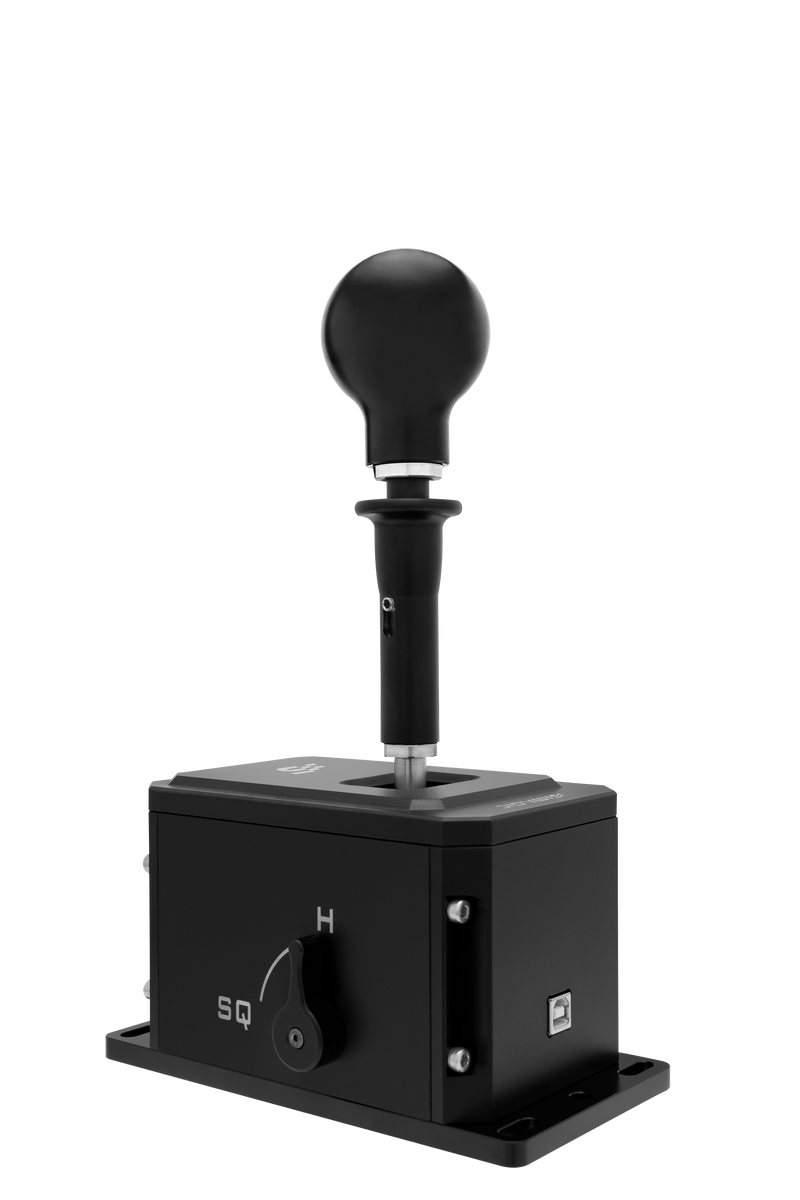
Hybrid or dual-mode shifters


Mounting and cockpit compatibility
A good shifter with a bad mounting setup can ruin the experience. Both matter equally if you want to be comfortable and, above all, keep the experience faithful to the real thing.
Shifters and handbrakes are mounted on a dedicated bracket on your cockpit. Most mounts are compatible with 40x40 or 80x40 aluminium-profile cockpits. A desk clamp can be an alternative, but it often works poorly with H-pattern shifters because of the repeated pulling and lateral forces.
How to mount your shifter correctly
The mount and shifter should be adjusted correctly so you can change gear ergonomically.

H-pattern
Requires more arm travel from the steering wheel, plus a lower and more offset position for the arm operating the shifter.
Sequential shifter and handbrake
Require less lateral arm movement and should sit closer to steering-wheel height.
For left-handed drivers, not every left-side mounting solution will work. If that applies to you, it is worth checking before you buy. You can browse the range of cockpit mounts and accessories before choosing your shifter.


Summary and recommendation by driver profile
Frequently asked questions about sequential, H-pattern and paddle shifters

Written by Salva Talens
Professional esports driver and coach, co-founder of Simufy Academy
Engineer and professional esports driver, co-founder of Simufy Academy. He races in the iRacing top split with over 9,000 iRating and has qualified for the Porsche TAG Heuer Esports Supercup. He knows hardware from the only place that matters: lap pace.


